 |
 |
 |
 |
 |
 |
 |
 |
 |

 |
As Unrest Spreads, China Intensifies Control Of Media
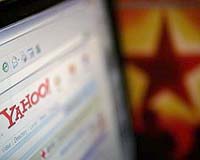
Beijing (AFP) Feb 01, 2006 These are dark days for China's media as the communist government, increasingly nervous about social unrest, intensifies control over what can and cannot be reported to the public, shutting down newspapers and sacking journalists who question its authority. But analysts and journalists say that the tighter it controls the media, the bigger the problem the government is creating for itself by removing one of the few checks on rampant corruption, abuse of power and social injustice, the very factors feeding public dissatisfaction with one-party rule. "Under such an authoritarian regime, corruption will thrive, people's interests will be sacrificed and there will only be more suffering," said Gao Yu, a journalist who was labelled an "enemy of the people" after the 1989 Tiananmen crackdown and has spent a total of seven years in prison. In the past year, outspoken media organisations have been silenced one after another as more publications and Internet websites are closed, and editors and journalists sacked or jailed. Most recently, the senior editor of Beijing News, or Xinjing Bao, was sacked in December, not long after the head of its sister paper in Guangdong province, Southern Metropolitan News, was removed. Both papers had reported on such sensitive topics as armed suppression of protests and official corruption. Earlier this month the government closed an influential supplement called Bingdian, or Freezing Point, that had been published for 10 years by China Youth Daily. The supplement was accused of "breaching news propaganda discipline" after an article challenged the official view of foreign occupation of China in the late 19th century. The government has tightened control of the Internet, closing down websites carrying postings by intellectuals and, by jailing people who have used the Internet to access or distribute information critical of the government, created a new class of "cyber-dissident". According to the New York-based Committee to Protect Journalists, China was the world's leading jailer of journalists in 2005 for the seventh consecutive year, with 32 imprisoned -- of which 15 were Internet writers. The controls have been successfully, and controversially, extended to foreign Internet service providers, with both Yahoo and Google drawing international criticism for complying with Chinese government censorship requirements. Last April, Yahoo handed over email account details of journalist Shi Tao, who was later sentenced to 10 years in prison for "divulging state secrets abroad." Google has come under fire for launching a self-censored search service in return for the right to operate in China. Journalists say the Chinese leadership is only too aware of the volatile social situation and fears that free and indepth reporting of unrest would unleash further discontent. According to official statistics, the number of "public order disturbances" in China rose by 6.6 percent to 87,000 last year. Official corruption remains rampant in China despite many government anti-graft campaigns and is often cited by state media as a major source of public discontent. Journalists who expose social conflicts or probe sensitive political issues can find themselves on the wrong side of authorities who want to hide any scandal. "There are many sensitive stories that you can't report and you know you have to avoid," said a journalist who declined to be named for fear of retribution. The Chinese government accused New York Times researcher Zhao Yan of "divulging state secrets" shortly after the paper reported the resignation of former president Jiang Zemin from his top military post. Zhao has been in detention since September 2004. Political observers said official media censorship tightened in 2004 ahead of the fourth plenary session of the Communist Party's elite Central Committee, where caution against ideological liberalisation was a key theme. Paris-based Reporters Without Borders ranks China 159th on a list of 167 countries in its global press freedom index. "So many issues have never been reported," Vincent Brossel, the rights group's Asia Pacific spokesman, said. "It's creating a sort of distortion and I think it is dangerous in the long-term for the Chinese society." Lu Yuegang, a veteran editor who worked at the defunct Bingdian, said this suppression would only lead to more corruption and abuse of government power, sacrificing the country's long-term social stability. "Without checks and balances, what sort of a society will this be?" he asked. "If power is not restricted ... if people don't learn about the truth, what kind of a country is this?" Gao Yu, who won UNESCO's Guillermo Cano World Press Freedom award in 1997, agreed. "You can't rely on (President) Hu Jintao and (Premier) Wen Jiabao to save the people, you need supervision by the media," she said.
Source: Agence France-Presse Related Links -  China Puts Technology At Policy Forefront
 Washington (UPI) Feb 01, 2006
Semiconductors may be the best way for China to move beyond simply being regarded the factory to the world, albeit a huge one at that. |
|
|

| The content herein, unless otherwise known to be public domain, are Copyright 1995-2006 - SpaceDaily.AFP and UPI Wire Stories are copyright Agence France-Presse and United Press International. ESA PortalReports are copyright European Space Agency. All NASA sourced material is public domain. Additionalcopyrights may apply in whole or part to other bona fide parties. Advertising does not imply endorsement,agreement or approval of any opinions, statements or information provided by SpaceDaily on any Web page published or hosted by SpaceDaily. Privacy Statement |