 |
 |
 |
 |
 |
 |
 |
 |
 |

 |
Outside View: US, PRC At Odds On Taiwan
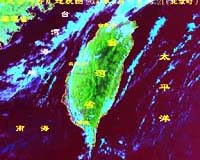
Bonn, Germany (UPI) Oct 26, 2005 Taiwan is the flashpoint of U.S.-China relations. Washington and Beijing have completely different views about the political future of the island. While the U.S. government repeats its stance that the future of Taiwan can only be shaped by peaceful means, Beijing emphasizes its opinion that Taiwan is a renegade province of China and the People's Republic has the right to unify both states through the use of force if Taiwan declares its independence. The political and social developments that have taken place in Taiwan make the situation very difficult. Until the late 1980s, Taiwan was a rough one-party dictatorship. This party -- the Kuomintang (KMT) -- fled from the mainland in 1949 and declared itself to be the only legal government of all of China. For the CCP that was ruling the mainland, the KMT was a convenient enemy because Taiwan was governed by political leaders that came from the mainland and shared Beijing's point of view that Taiwan was a province of China. In 1988, the situation in Taiwan changed dramatically. After the death of Chiang Ching-kuo, the son of Chiang Kai-shek who succeeded his father as political leader of Taiwan after the death of the older Chiang in 1975, Lee Teng-hui was appointed as the new president on the island. Unlike his predecessors, Lee is a native of Taiwan. He was born in 1923 when Taiwan was part of the Japanese colonial empire and was educated in the Japanese school system. As noted by Willem van Kemenade, one of the best Western observers of Taiwan, Lee does not have any sentimental or historical attachments to the mainland. Under Lee's political rule from 1988 to 2000, Taiwan underwent a historical change from a brutal one-party dictatorship to a liberal democracy. At the same time, the members of the political elite of the island state who mostly were mainlanders were replaced by native-born Taiwanese. Like Lee, these people did not have any sentimental feelings toward China. Beijing feared that Taiwan was drifting towards a fully independent political status. In 1996 only five years after the end of the Cold War, the biggest buildup of U.S. armed forces since the end of the Vietnam War took place near the Taiwan Straits. The presidential election in Taiwan in that same year triggered this action. In 1995, China began a series of military maneuvers that included ground, air and sea forces. The government in Beijing intended to intimidate the Taiwanese people and manipulate the elections in order to prevent Lee from being elected. Beijing feared that after a possible election of Lee Teng-hui, Taiwan would drift further away from the mainland. To counter Beijing's power projection, the United States deployed two aircraft carrier groups near the Taiwan straits. Although China's made a massive effort to influence Taiwan's election and prevent Lee Teng-hui from being elected, Lee became the first head of state in Chinese history that was elected in a democratic way. For China's leaders, Lee was a "splittist" -- a politician who wanted to separate Taiwan from the mainland. The election of Chen Shui-bian as president of Taiwan in the year 2000 must have been even worse for Beijing. Unlike his predecessors, Chen is not a member of the KMT, which ruled Taiwan for nearly half a century. Instead, he is a member of the Democratic Progressive Party (DPP). The DPP is mainly comprised of native Taiwanese and openly advocates the formal independence of the island state. To make matters worse from Beijing's point of view, Chen was reelected in 2004. Nevertheless, the Chinese government has been remarkably calm despite the political developments in Taiwan. This changed when on March 15, 2005, in Beijing the National People's Congress (NPC) passed a law that allows the government to use military force to prevent Taiwan from declaring formal independence. This incident again demonstrated how sensitive the situation is between the two Chinese states. Taiwan will remain the most serious cause for conflict between the United States and China. In addition, Taiwan is challenging Beijing in two ways. Firstly: Taiwan is a de facto independent country. If the Beijing government would allow Taipei to declare formal independence, regions of the mainland like Tibet, Xinjiang or the coastal provinces of Southeast China like Guangdong might be encouraged to do the same and would break away from the capital. Secondly, Taiwan is a developed democracy and therefore totally different from the one-party dictatorship the rules the mainland. Diverging views in Washington and Beijing over the political future of Taiwan will remain the most difficult problem between the two states. This conflict will be more serious than China's violation of human rights, the struggle over the massive U.S. trade deficit or Beijing's proliferation of nuclear and missile technology to states like Iran and Pakistan. However, all these problems only conceal the fundamental reason that makes U.S.-China relations so difficult. Thomas Wiegand is a lecturer in foreign and security policy for the Friedrich Ebert Foundation, the University of Bonn and the German armed forces. This article is reprinted by permission of the Munich-based World Security Network. United Press International's "Outside View" commentaries are written by outside contributors who specialize in a variety of important issues. The views expressed do not necessarily reflect those of United Press International. In the interests of creating an open forum, original submissions are invited. Related Links SpaceDaily Search SpaceDaily Subscribe To SpaceDaily Express  China Aims To Balance International Payments By 2010
 Beijing, China (AFP) Oct 26, 2005
China aims to balance its international payments, currently heavily in its favor, by 2010, the chief foreign exchange regulator said Wednesday. |
|
|

| The content herein, unless otherwise known to be public domain, are Copyright 1995-2006 - SpaceDaily.AFP and UPI Wire Stories are copyright Agence France-Presse and United Press International. ESA PortalReports are copyright European Space Agency. All NASA sourced material is public domain. Additionalcopyrights may apply in whole or part to other bona fide parties. Advertising does not imply endorsement,agreement or approval of any opinions, statements or information provided by SpaceDaily on any Web page published or hosted by SpaceDaily. Privacy Statement |