 |
 |
 |
 |
 |
 |
 |
 |
 |

 |
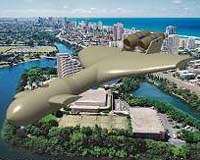
Cyber Defenses' CyberScout Performs Transition From Hover To Forward Flight
Cyber Defense Systems has announced that on May 13 their CyberScout UAV performed its first transition flight from hover flight to forward flight. The CyberScout, a gas powered VTOL type vehicle, is the first in a series of planned UAV's being developed to hover and/or fly horizontally for up to 60 minutes at speeds of 300 MPH plus. The successful test flight began with a stable hover followed by a vertical ascent to 200 feet above ground level then to forward flight. When ready for market, the CyberScout should weigh approximately 80 pounds with a camera, a standard flight autopilot with an autonomous flight system, and hold a five-pound payload pod, which can be rapidly field-configured with a wide array of cameras, sensors, weapons, and instruments. Jim Alman, President Cyber Defense Systems states, "The CyberScout is one of the best handling aircraft that we have ever flown. No bad tendencies were observed at all during flight. Prior to the test, the decision was made to operate the vehicle manually without the autopilot in forward flight. "The vehicle was flown in a figure eight circuit to verify control response and effectiveness. Confident, we will now move forward to the next phase of the project, which involves use of higher thrust turbine power plants." Billy Robinson, CEO Cyber Defense Systems comments, "To go from concept to a fully operational prototype in six months is a monumental achievement for a small company like Cyber. A number of other groups have been trying for years to achieve the same level of success we have gotten in such a short term." Cyber Defense Systems is an operating subsidiary of Proxity, Inc. (Pink Sheets:PRXT) and has filed patents with the United States Patent and Trademark Office to protect CyberScout's unique features. The current CyberScout prototype has evolved into a capable and proven UAV. The phase two CyberScout is expected to weigh approximately 21 pounds empty and be powered by three of the new power plants while carrying a five-pound payload. The engineering team has been testing a small turbine and completed the required analysis to select a suitable phase two power plant. Related Links Cyber Defense Systems Proxity SinoDaily Search SinoDaily Subscribe To SinoDaily Express  Unmanned Aircraft Fires Missile To Kill Al-Qaeda Leader In Pakistan
 Washington (AFP) May 14, 2005
An Al-Qaeda leader from Yemen was killed this week by a missile fired by an unmanned CIA Predator plane in a mountain region of Pakistan close to the border with Afghanistan, US media reported last Friday. |
|
|